
The power of Fitness training
01
Expert Trainers
Our trainers are the best in the business. We have instructors from all walks of life who are passionate about health and fitness. We love helping people meet their goals.
02
Unlimited Access
When you join Brown Hornet Fitness, you get unlimited access to all of our resources. From classes, to personal training, to dieting and nutrition.
03
Holistic Support
We don't only focus on physical excercise. Our plans and training programs cover mind, body, and spirit. We focus on the whole person.
Read the Latest
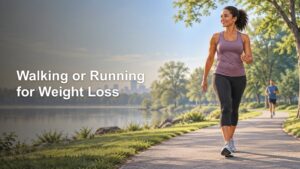
Walking vs Running for Weight Loss: Which Fits Your Goal Better?
Running burns more energy per minute, but walking is easier to recover from and repeat. Here is how to choose the right approach for your weight-loss and fitness goals.

How to Start Exercising When You’re Very Out of Shape
A low-pressure beginner plan for rebuilding fitness with short, comfortable sessions, simple strength exercises, gradual progression, and clear safety boundaries.

Peptides for Recovery: What Claims Have Human Evidence?
Popular recovery peptides have plausible mechanisms and extensive marketing behind them, but convincing human evidence for faster healing or return to training remains limited.

Cheapest vs Best Research Peptide Supplier: Why Price Alone Can Mislead
The lowest listed price may not deliver the best research-procurement value. Use this framework to compare price, documentation, traceability and fulfillment.

Best Research Peptide Supplier for Quality Testing
A quality-first framework for research peptide procurement, including scorecard results, COA checks, analytical limitations and supplier tradeoffs.

Zone 2 Cardio Explained: What It Is and Who Benefits Most
Zone 2 is a sustainable aerobic effort, not a universal heart-rate number. Learn how to recognize it, use it in your routine, and avoid common myths.
Youth and Kids
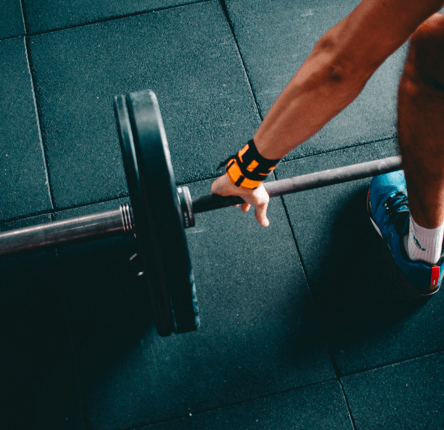
Hey parents, why not bring your kids to BHF KidCamp! It will introduce your children to physical fitness as a fun and healthy lifestyle. According to the American College of Sports Medicine, regular participation in different types of physical activity is essential for healthy growth and development, and can also improve academic performance and promote feelings of well-being. Positive lifestyle behaviors such as participating in daily physical activity that begin during childhood and adolescence tend to carry over into adulthood.

Athletic Training
At BHF, our sport specific team training will prepare your team for an upcoming season or competition. Our team training teaches teamwork and accountability. It helps increase strength and reduce the risk of injury and burnout from over-training. Bring your athletic team to Brown Hornet Fitness, we’ll make you “Better Than Before.”
Nutritional Counseling
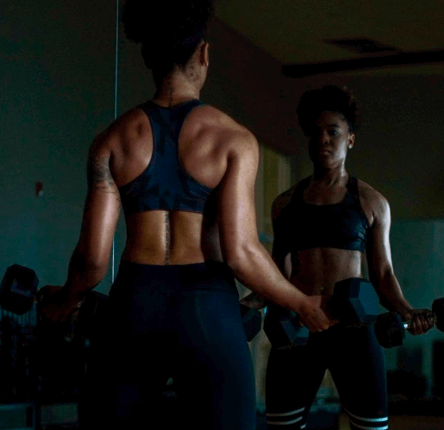
Approximately 70% of all causes of death in the United States are related to lifestyle. At BHF, we offer Nutritional Counseling and Wellness Coaching. Learn how to make healthier food choices, improve your nutritional lifestyle and increase your longevity. Learn about various “superfoods” rich in antioxidant nutrients needed for assisting in the fight against diabetes, hypertension, heart disease and high cholesterol. We offer personalized meal plans for weight and body fat monitoring.
community favorites

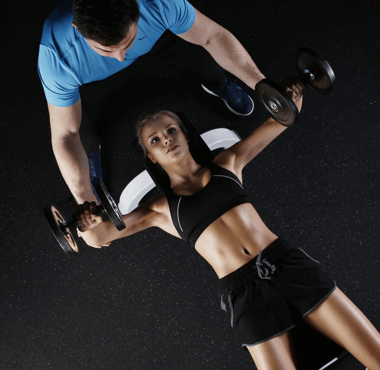
Personal Training
Whether your fitness goal is to lose weight, get toned, gain endurance and strength, or prepare for a competition or military-style training, the certified trainers at BHF can help you achieve it. Take your fitness to the next level with a Personal Training Package. We will guide you through a workout personalized for your fitness level and goals, and help you break plateaus by continuing to challenge you with regularly updated routines.
Fit Camp
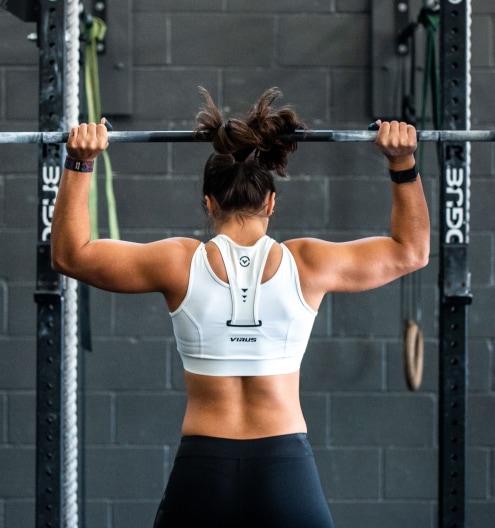
Our signature group training class is a blend of Circuit Training, High Intensity Interval Training and Resistance Training, all combined with perpetual movement. FitCamp will assist with goals of weight loss, toning, definition and cardiovascular endurance. We designed FitCamps to meet all fitness levels and to offer all participants a challenging but fun workout. Some classes fill fast, so save your spot by registering online.

Cardio and HIIT
Train with BHF’s own Anthony AB Barnes, a champion boxer who turned professional in 1988 and is still active. His one-on-one Cardio Boxing training sessions help develop cardiovascular endurance, hand-eye coordination, mental focus, confidence and self-defense tactics. You can find AB posted at the boxing station in our evening FitCamps, but for a full Cardio Boxing workout, schedule a one-on-one session here.
Youth and Kids
Hey parents, why not bring your kids to BHF KidCamp! It will introduce your children to physical fitness as a fun and healthy lifestyle. According to the American College of Sports Medicine, regular participation in different types of physical activity is essential for healthy growth and development, and can also improve academic performance and promote feelings of well-being. Positive lifestyle behaviors such as participating in daily physical activity that begin during childhood and adolescence tend to carry over into adulthood.
Athletic Training
At BHF, our sport specific team training will prepare your team for an upcoming season or competition. Our team training teaches teamwork and accountability. It helps increase strength and reduce the risk of injury and burnout from over-training. Bring your athletic team to Brown Hornet Fitness, we’ll make you “Better Than Before.”
Nutritional Counseling
Approximately 70% of all causes of death in the United States are related to lifestyle. At BHF, we offer Nutritional Counseling and Wellness Coaching. Learn how to make healthier food choices, improve your nutritional lifestyle and increase your longevity. Learn about various “superfoods” rich in antioxidant nutrients needed for assisting in the fight against diabetes, hypertension, heart disease and high cholesterol. We offer personalized meal plans for weight and body fat monitoring.
we are Brown Hornet
Since 2009, we’ve helped thousands of people around the world get in shape and make permanent progress. No guilt or shame, just results!
Our community will help you build custom workout programs and provide nutritional guidance, support, and accountability.

Police Academy Training
With 20 years of experience as a certified PT Instructor through the NJ Police Training Commission, BHF founder Rol Morgan specializes in preparing potential and active recruits for the physical demands of police academy fitness training. Preparatory training is available for individuals and groups, for independent recruits and department hires.

Bodybuilding Coaching
We offer one-on-one bodybuilding competition coaching by Rol Morgan, a former Mr. NJ/Mr. South Jersey Champion. Learn compulsory poses and the best angles, points of contraction and methods of on-stage endurance.
Mobile Gym
Our mobile gym, aka The Hornet Mobile, is fully equipped with everything we need to create a FitCamp or Personal Training session away from the Hive. Whether you want to offer your employees the option to train during the workday or you want to add a workout option to an event, let us show you how fun it is to be fit!
Our method has been tested


We care about science-backed nutritional information.
Thank you to our sponsor American Label.
We recommend CustomStickers for all your swag and sticker needs.
Frequently Asked Questions
Contact us now to schedule a free initial assessment, wherein we will work with you to:
- evaluate current fitness level
- establish fitness goals
- develop a personalized fitness program
- and create a personalized, balanced wellness routine.
Results will vary based upon your levels of commitment, effort and nutrition. If properly followed, the personalized fitness and wellness programs created for you by our trainers will enable you to achieve your fitness goals in a stable, healthy fashion. While we will give you the tools and encouragement you need, your success will depend upon your own work.
No, we can create fitness plans around all levels of conditioning.
We do accept inquiries from qualified, certified personal trainers. Contact us for more information.
Based on your initial assessment, a doctor’s approval form will be provided to you if needed. This will describe the level and type of exercises proposed by our trainer, which your doctor will use to determine its appropriateness for you.
Each training session normally consists of four components:
- Cardiovascular Endurance–this refers to the ability of your heart and lungs to work together to fuel your body with oxygen. To improve cardiovascular endurance, aerobic conditioning such as cycling, walking or jogging is used at a personally appropriate level and type.
- Muscle Strength–this refers to the amount of force a muscle can exert, in a single effort.
- Muscle Endurance–this refers to the ability of a muscle to perform a continuous effort without fatiguing.
- Flexibility–this refers to the ability of each joint to express its full range of motion. To improve flexibility, individual muscles are stretched or utilized in specific, slowly-executed exercises.
Make sure to stay hydrated. Using water bottle stickers can make your hydration memorable.
Brown Hornet Fitness is located at 1672 N Delsea Dr in Vineland, NJ. Founded by Roland Morgan in 2014. We offer all the resources you need to reach your health and fitness goals.
Unlimited access to classes, personal training and nutritional guidance. Our programs are holistic in nature, mind, body and spirit to help you overall well being.
We cater to all fitness levels and ages. Fit Camp, Cardio and HIIT training, youth programs and team training for athletic teams. Nutritional counseling to help you make better food choices and improve your nutritional lifestyle.
Walking vs Running for Weight Loss: Which Fits Your Goal Better?
TLDR: Running wins on speed, but walking can win on consistency
Running generally burns more calories per minute, making it the more time-efficient option. Walking is easier to recover from, more approachable for beginners and often easier to perform frequently. For weight loss, the better choice is the one that helps you accumulate enough weekly activity without causing pain, excessive fatigue or repeated skipped workouts.
Choose running if you are short on time, tolerate impact well and want to improve cardiovascular fitness efficiently. Choose walking if you are new to exercise, carry significant excess weight, have trouble recovering from impact or simply prefer an activity you can repeat most days. A walk-run combination is often the best middle ground.
Neither option replaces nutrition. Exercise increases energy expenditure, but meaningful fat loss usually requires an eating pattern that keeps average calorie intake below expenditure. A routine that combines cardio, strength training and a manageable approach such as a balanced plate for weight loss is more complete than trying to outrun an inconsistent diet.
Running burns more calories in the same amount of time
If two people of the same size exercise for 30 minutes, the runner will normally expend more energy than the walker. The 2024 Compendium of Physical Activities assigns level walking at 2.8–3.4 mph an intensity of 3.8 METs and brisk walking at 3.5–3.9 mph an intensity of 4.8 METs. Running at 5.0–5.2 mph is listed at 8.5 METs, while running at 6.0–6.3 mph is listed at 9.3 METs. In practical terms, typical running intensities can demand roughly twice as much energy per minute as ordinary or brisk walking.
| Activity | Example pace | Compendium intensity | Practical meaning |
|---|---|---|---|
| Level walking | 2.8–3.4 mph | 3.8 METs | Accessible moderate activity for many adults |
| Brisk walking | 3.5–3.9 mph | 4.8 METs | More challenging without requiring running |
| Easy running | 5.0–5.2 mph | 8.5 METs | Higher expenditure per minute |
| Faster running | 6.0–6.3 mph | 9.3 METs | More demanding and harder to recover from |
Those values are reference estimates, not promises about how many calories your watch will display. Body size, pace, hills, terrain, fitness and movement economy all affect actual expenditure. The comparison also changes depending on whether you hold time or distance constant. Running clearly covers more distance in a fixed session, but walking the same distance takes longer and narrows part of the total-energy gap.
The practical verdict is simple: running is better when time efficiency matters. Walking can still generate substantial weekly expenditure if you have enough time to perform it regularly.
Weight loss depends more on weekly volume than exercise labels
Both activities can contribute to weight loss, but neither reliably produces large losses in isolation. A 2024 meta-analysis covering 116 randomized trials found that greater amounts of supervised aerobic exercise were associated with larger reductions in body weight, waist circumference and body fat. The authors concluded that more than 150 minutes per week of moderate-intensity or harder aerobic activity may be needed for clinically important reductions in waist circumference and body fat.
Federal guidance recommends 150–300 minutes of moderate aerobic activity per week, or the vigorous-intensity equivalent, plus muscle-strengthening work on at least two days. Brisk walking counts as moderate activity, while running generally counts as vigorous activity. The official Physical Activity Guidelines overview provides the broader targets. Some adults may need the equivalent of 300 minutes or more of moderate activity, alongside lower calorie intake, to lose weight or maintain a loss.
This is why a 20-minute run is not automatically better than a 60-minute walk. The run is more intense, but the longer walk may produce similar or greater total expenditure while creating less fatigue. What matters is how the session fits into your entire week.
Exercise can also affect hunger differently from one person to another. Do not assume every calorie shown by a device creates an equal deficit. Track your body-weight trend, waist measurements, food intake and workout consistency for several weeks, then adjust the plan based on the outcome rather than chasing a supposed fat-burning zone.
Walking is usually easier to tolerate and repeat
Walking places a lower immediate demand on your cardiovascular system and generally produces less impact and muscle soreness than running. That makes it a strong starting point if you are sedentary, returning after a long break or trying to increase activity without compromising your strength workouts.
Running injuries are not inevitable, but beginners should respect the workload. One systematic review found that the knee, ankle, lower leg and foot were among the commonly affected areas in running-related injuries. Another review reported 17.8 injuries per 1,000 running hours among novice runners, compared with 7.7 among recreational runners. Definitions and estimates varied between studies, but the difference supports gradual progression rather than jumping directly into frequent runs.
That does not mean recreational running automatically ruins your knees. Review-level evidence has not associated common recreational activities such as walking and running with structural progression of knee osteoarthritis. Another meta-analysis found lower observed hip and knee osteoarthritis prevalence among recreational runners than among competitive runners and sedentary controls, although it could not establish that running caused the difference. Previous injuries, training volume and intensity still matter.
If walking is comfortable but feels too easy, increase the pace, add hills or use short incline intervals. Level walking at 4.0–4.4 mph is listed at 5.5 METs, while moderate walking with poles reaches 4.3–5.3 METs. You can therefore make walking meaningfully harder without crossing into a run.
Adherence is the real tiebreaker
The theoretical advantage of a workout means little if you avoid it. Reviews of exercise adherence among adults with overweight or obesity have not found one universally successful prescription based on frequency, duration or intensity. Supervision, social support, group sessions and structured programs were associated with better attendance or adherence in some included studies.
Walking has a practical advantage because it can be attached to normal life. You can walk during lunch, take a longer route to a shop, schedule an evening loop or break one session into shorter blocks. Running usually requires more deliberate preparation, recovery and access to a shower afterward. Running may nevertheless be easier to sustain for someone who enjoys measurable pace goals and wants a challenging workout rather than additional daily movement.
- Choose walking if convenience, joint tolerance and frequent repetition are your priorities.
- Choose running if you tolerate impact, enjoy vigorous exercise and need to do more work in less time.
- Choose both if you want the consistency of walking and the fitness stimulus of running.
- Reduce the intensity if soreness changes your movement or persists into your next scheduled session.
Match the activity to your wider fitness goal
For maximum calorie expenditure in limited time
Running is the stronger option if you have only 20–30 minutes and can handle the impact. Start with an easy conversational pace rather than turning every run into a race. More intensity is not automatically better when it reduces the number of sessions you can complete.
For beginners or people returning to exercise
Begin with walking. Aim for a duration you can complete comfortably and repeat at least three times per week. Gradually add five to ten minutes, increase your pace or introduce gentle hills. Once you can walk briskly for 30–45 minutes without troublesome pain, short running intervals become a reasonable option.
For better cardiovascular fitness
Running usually delivers a larger aerobic challenge in less time. Higher-intensity interval training has produced larger average improvements in VO₂max than moderate continuous training in middle-aged and older adults, although both approaches improve cardiorespiratory fitness. Running is one way to access that intensity, not a requirement. Fast uphill walking, cycling and other low-impact intervals can also challenge the heart and lungs.
For preserving strength and muscle during weight loss
Use either form of cardio, but manage fatigue and keep resistance training in the plan. Frequent hard runs can interfere with lower-body training if your recovery capacity is limited. Easy walking is less likely to compete with lifting and can increase expenditure on rest days. Our cardio versus weights comparison for weight loss explains how to divide those priorities.
A practical walk-run plan
You do not have to declare yourself a walker or a runner. A gradual hybrid plan captures many of the benefits of both while giving your joints and connective tissues time to adapt.
- Walk easily for five minutes to warm up.
- Alternate one minute of relaxed running with two or three minutes of brisk walking.
- Repeat the cycle five to eight times, depending on your current capacity.
- Finish with another five minutes of easy walking.
- Perform the session two or three times per week, leaving recovery time between sessions.
- Increase only one variable at a time: total duration, running interval length or weekly frequency.
Keep additional walks easy and continue strength training at least twice per week. If weight loss stalls, review your food intake and total weekly movement before making every run harder. Once you reach your target, preserving these repeatable routines will also help with preventing weight regain after a successful cut.
The final verdict
Running is better for burning more calories per minute and developing vigorous aerobic fitness efficiently. Walking is better for accessibility, recovery and accumulating activity with less disruption to the rest of your week.
For most beginners, walking is the smarter starting point. Build a dependable weekly activity habit, then add short runs if you want greater time efficiency or a stronger fitness challenge. If you already run comfortably and enjoy it, there is no weight-loss reason to replace it with walking. The winner is the option—or combination—you can sustain while maintaining a manageable calorie deficit and enough strength work to support your body-composition goals.
Frequently asked questions
Is walking every day enough to lose weight?
It can contribute meaningfully, especially if you walk briskly and accumulate enough weekly time. Results still depend on food intake and your total energy balance. If daily walks are not changing your weight trend after several weeks, increase duration or intensity modestly and review calorie-dense foods and drinks.
How long should I walk compared with running?
There is no exact universal conversion. At typical speeds, running can have roughly twice the MET intensity of ordinary or brisk walking, but individual expenditure varies. If you replace a run with a walk, expect to spend more time moving to create a similar energy demand.
Is incline walking as good as running?
Incline walking can create a vigorous cardiovascular challenge with less speed and no airborne running phase. It is an excellent alternative if you dislike running or do not tolerate it well, although the exact demand depends on speed and incline.
Should I walk or run if I have knee pain?
Choose the option that does not aggravate your symptoms, and avoid assuming that all running is inherently damaging. Persistent pain, swelling, instability or pain that changes your gait deserves assessment by a qualified healthcare professional. A temporary switch to walking or another low-impact activity can maintain movement while the cause is addressed.
References
- Walking – Compendium of Physical Activities
- Energy expenditure of walking and running: comparison with prediction equations – PubMed
- Aerobic Exercise and Weight Loss in Adults: A Systematic Review and Dose-Response Meta-Analysis – PubMed
- Top 10 Things to Know About the Second Edition of the Physical Activity Guidelines for Americans | odphp.health.gov
- Physical Activity Guidelines for Americans, 2nd edition
- Physical Activity and Excess Body Weight and Adiposity for Adults. American College of Sports Medicine Consensus Statement – PubMed
- A systematic review of running-related musculoskeletal injuries in runners – PubMed
- Incidence of Running-Related Injuries Per 1000 h of running in Different Types of Runners: A Systematic Review and Meta-Analysis
- Walking, running, and recreational sports for knee osteoarthritis: An overview of the evidence.
- The Association of Recreational and Competitive Running With Hip and Knee Osteoarthritis: A Systematic Review and Meta-analysis – PubMed
- Efficacy of Interventions to Promote Exercise Adherence in People With Overweight or Obesity: A Systematic Review.
- Characteristics of interventions with exercise according to the adherence of adults with obesity: A systematic review.
- Interval training versus moderate-intensity continuous training for cardiorespiratory fitness improvements in middle-aged and older adults: a systematic review and meta-analysis – PubMed